Minotaurs and Merlions: P’s Very Un-Darwinian Language Evolution.

Pea’s evolving language never ceases to amaze and amuse me.  I know kids brains are supposed to be all pliable and sponge-like with an incredible capability to sort and slot all sorts of information but there are times when I feel even I am pushing the limits.

My poor child was subjected to a number of waves of different dominant languages from English to Spanish to French, back to English with quite a bit of Mandarin in the last few months. Lately, her exposure to Spanish has fallen to a record low.

How I would portray P’s Spanish since moving to Singapore

Given P’s linguistic history, it’s no wonder her languages are a bit all over the place. Even following OPOL for the most part, the variation in exposures has fluctuated so much. I find it interesting that the words that seem to be sticking in French are verbs and she has fought again and again the use of french pronouns. I’m curious if that is a pattern in kids who mix. I expected nouns to be the first words to change since you don’t need to conjugate them. I’ve definitely noticed her avoid articles like Le and La, replacing them in stead with The.

Some of her linguistic concoctions:

Fading like a Dodo bird
She systematically used the Spanish word for with i.e. con. I loved hearing her say ‘i go con you’  and long to hear her speak con me that way.

Rising in numbers like Singaporean mozzies after a rainstorm

You plie it

‘You fold it’ AKA my toddler ordering me to clean up after myself. I blame her OCD father

 I mélange it

‘I stir it’ AKA my control freak toddler ordering me away from her yogurt and honey.

 I don’t want baby Claude to dérange me

‘I don’t want baby Claude to bother me’ AKA ‘I need you to both stay seated next to me while I colour, paint, play, etc and simultaneously take baby Claude away to another room. I don’t care if they haven’t figured out cloning. You are omnipotent so make it happen.’

My sirene goes under the water

‘My mermaid goes under the water’  Yes well she’s half fish so she would wouldn’t she. And now if only you would go under the water; I’ve spent a freaking fortune on those swimming lessons.

Finally my favorite category – the bilingual hybrid.
Please meet Tiny. Tiny is P’s Perroque. (half Parrot half Peroquet)

Sometimes, she really amazes me. Just when I’ve given up on the idea that she will act as my interpreter when we visit my lovely Mexican Mother-in-Law, she’ll point out a random object like a crane and say “that’s grua in Español”.

My heart soars!

So like any good parent, I offer her some gateau. “No Maman, I want cake! That’s pastel in Español”.

Two steps forward, one step back. Even sponges reach saturation point. I trust someday these languages will work together.

Tartines et Lait au Chocolat

We recently returned from France, which is one of many reasons my blog has been dormant. During the first breakfast after we arrived, I suddenly realized that this trip to France was going to be about much more than having an opportunity to immerse my girls in French for a place influences so much more than simply language.  For me France switches off certain parts of me or at least triggers some sort of hibernation while other parts turn on. Where I am can definitely affect how I think about things, what I want to do, whether I gain weight when I eat porc fat on white bread and what I crave for breakfast.

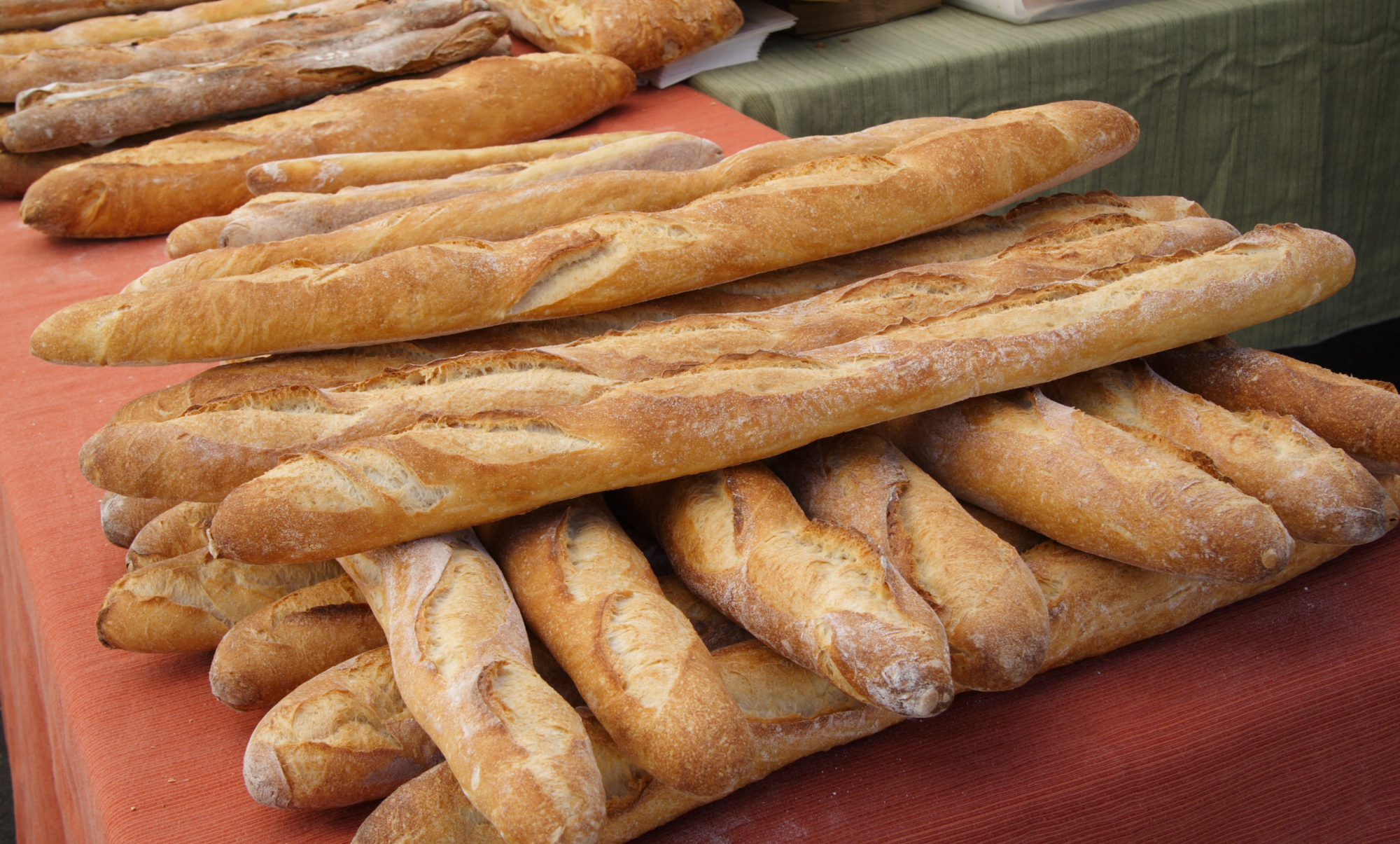
My eldest is definitely an oatmeal/cereal girl for breakfast but when we found ourselves the first morning at my aunt’s kitchen table, it seemed simply wrong to feed her such a thing. I mean, we were in FRANCE! Cheerios in Normandy? Sacre Bleu Non! This is the land of seriously good bread. This is where you ignore the warnings of white products and you gorge yourself on an endless supply of baguettes morning, noon and night!

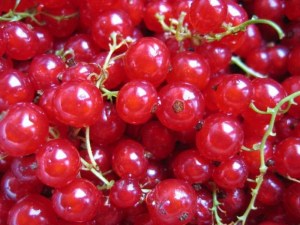
I told her she would be having ‘tartines et de la confiture aux groseilles’. She liked the word ‘groseilles’ so that went down well.Groseilles is one of those words that remind me how my vocabulary is seasonal and that I typically know the names of plants and fruits in French and everything else in English. Sometimes I know the words in both languages without knowing they are the same thing. So for the last 20 odd years I’ve thought that I liked ‘groseilles’ but not currants when in fact they are the same thing!

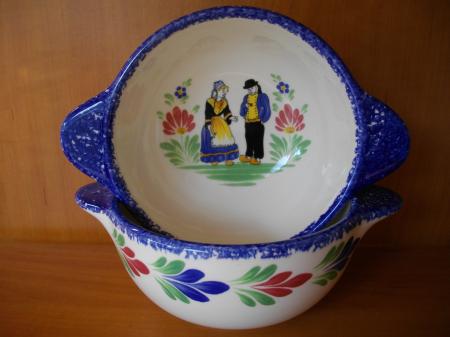
I was also determined for her to have a bol de chocolat for no reason other than I used to have it as a little girl during my summers in France. (A total milkaholic kid, the chocolate was the only way I would tolerate U.H.T milk). Drinking your coffee or hot chocolat out of a bowl is as far as I know extremely French.

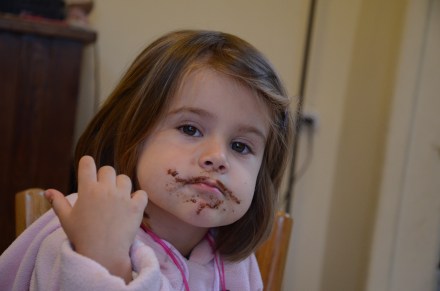
Seeing her sit there holding the two little handles with a serious chocolate Dali-esque moustache, it dawned on me that I didn’t just want her to speak French, I wanted her to identify with what I perceive as some of the quintessential French experiences I grew up with during my long summers at my Grandmother’s.

I couldn’t wait for her to experience her first real ‘pain au chocolat’ straight from the ‘boulangerie’ whose incredible selections of fresh-baked patisseries always seemed magical. So much of French culture revolves around food and in my case, having grown up in an urban center, France was also my grounding in all things nature related especially the connection between land and plate. It was also such a nice change to be able to walk through the gardens and countryside and not need my pocket dictionary but just have the names of flowers and fruits to hand, to recognize the wild blackberry bushes, and have her pick her own strawberries from the ground, still warm from the sun – never at a loss for words.

QuickPost #1: Interesting read on bilingual babies

Here is an article in the New York Times on how bi/multilingual babies’ cognitive development differs from monolingual kids. I find the concept of “neural commitment” really interesting.

Enjoy!

“Por Favor LAH” : Singlish, Ebonics, and the role of different dialects

Out of the mouth of my babe came Singlish. I knew it was only a matter of time.

I am really torn by this. Part of me would LOVE for Pacifique to be able to slip in and out of as many languages as possible and having a creole as one of them would be cool albeit not terribly useful unless she wants to be a standup comedian and/or plans on spending lots of time in SouthEast Asia.

I do find it quite funny when she has little Ang moh friends over for play dates. At this point, all of them attend local daycares and nurseries so lots of them have totally taken on the Singaporean accent with bits of Singlish interspersed. And yet deep down something inside of me screams NOOOOOOOOOOO. I don’t know why. It don’t know that it is a rational feeling especially given that I think this famous ‘Winglish” kid is AWESOME. Click here for more. Perhaps it is my perpetual worry of not being able to expose the girls to enough of our “heritage” languages -in my case French and husband’s Mexican. Perhaps it is the worry that in addition to not having great French or Spanish, they won’t end up having excellent English.

And the concern about English isn’t just shared by expats. I have some local friends who are concerned as well though they appear to be in the minority if the commenters on this article written about Singapore’s Speak Good English Movement are an accurate reflection.

I think, though my position is still a work in process, that I embrace dialects and creoles as long as they have their cultural place but that ultimately in a competitive global economy, if you want to succeed you need to be able to speak proper English, especially if your country claims it as its or one of its official languages. I don’t think given what we know about multilingualism and children’s abilities to learn languages that we should dumb them down and not push them to do better or use it as an out for academic failings. The controversies over Ebonics comes to mind here.

Ok there is a lot more to be said, read and researched on this topic and this post was initially only going to be a three-liner. So I’ll leave you with this question: What do you get when you cross Spanish with Singlish?

Spinglish? Sipanglish?

And for a quick Singlish tutorial click here: Singlish 101