At a Loss for Words: My Foreign Language Meltdown

I am probably spoiled, being brought up bilingual and exposed to many languages and cultures. Perhaps I just haven’t been adventurous enough in my travels, but I don’t ever recall finding myself in a situation where I could neither derive any inkling of meaning from the exchange nor express in any terms or gesticulations what I needed to say—that is until now.

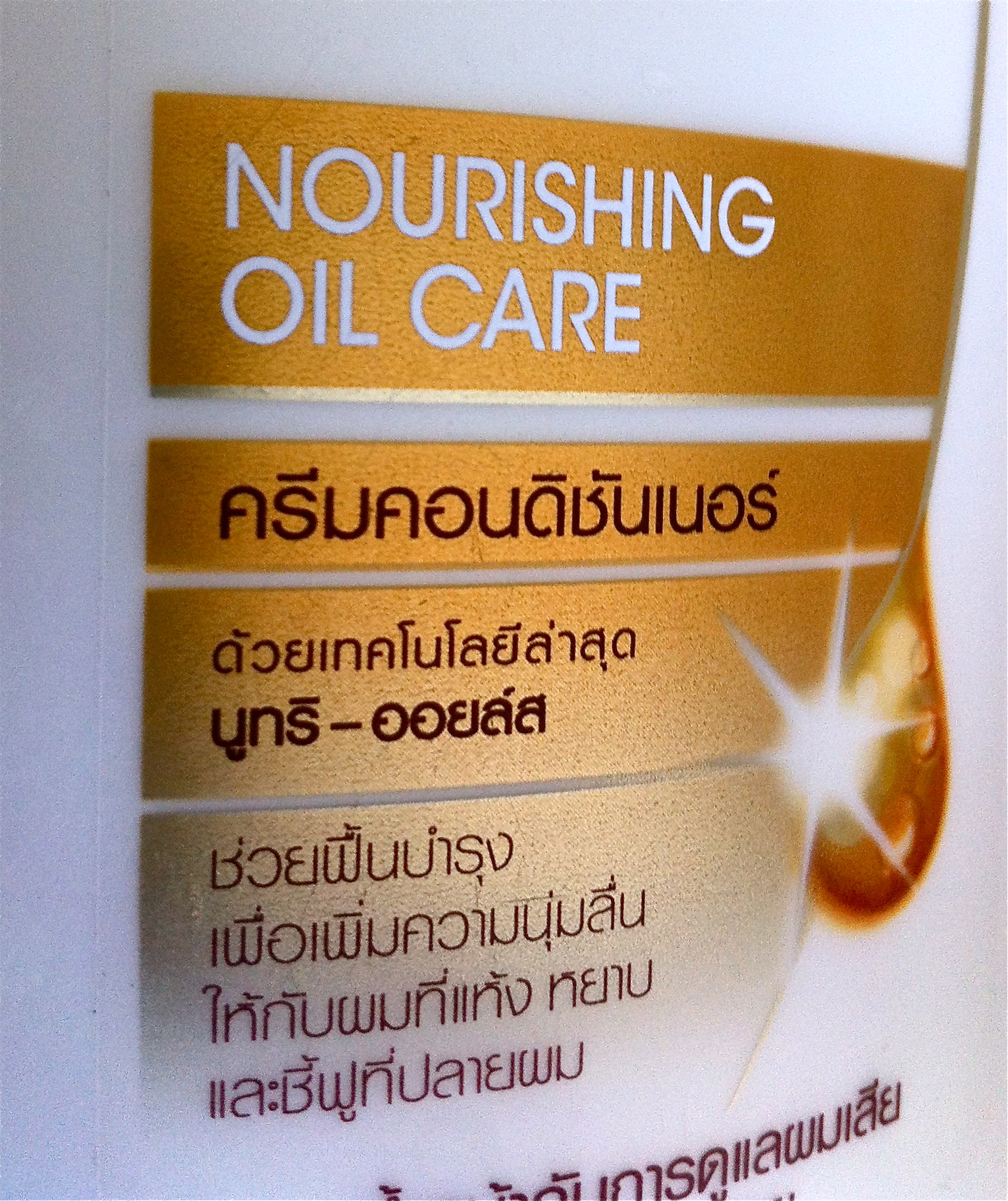
A few days after arriving at our new home in Bangkok, I set off for the hospital with a hefty fever, bronchitis and my two kids in tow since one of them was also sick. We had an easy and quick taxi ride there, despite the dreaded traffic, and shelled out just over 50 Baht (US $1.65).

An hour or so later, wowed by the incredible efficiency of our visit and the modernity of the hospital, and carrying two stylish bags of meds for my eldest and myself, we took a taxi back home. I check if the driver knows the main artery we live right beside, since I am utterly incapable of giving detailed directions. Geez I can’t even introduce myself yet.  The driver vigorously shakes her head, yes, she knows, and off we go. I am not too worried as I have the address written both in roman and Thai characters as a backup.

Fast forward twenty minutes with no recognizable landmarks, and she makes the first call for directions…

This post was written for In Culture Parent. To continue reading please click here!

Teenage Polyglot: An Inspiring Story in the New York Times Today.

This is a wonderful piece and a brutal reminder of all the opportunities I have let slip by in the past. (I should be fluent in Turkish, Danish, Italian and Spanish by now!)

My favorite quote in the article:

His final preparation consisted of watching Hindi soap operas, which have become a bonus pleasure, he said. “I get to feel less guilty about watching trash TV,” he said. “To watch ‘The Bachelor’ in English is one thing, but in Hindi it’s O.K.”

Hope you enjoy and are inspired!

Thrown in at the Deep End: P’s First Week at the Lycee Francais de Bangkok.

Having just celebrated her first anniversary at Kids Space, a fantastic little local pre-school on Pasir Panjang in Singapore, we moved our family 13 degrees north to Bangkok. Still tropical, still roughly the same number of daylight hours and still a minority,  P would now have radically different schooling experience.

She went from being accompanied to a small traditional Singaporean black and white house with a total of 25-35 students splitting their days between English and Mandarin to taking a school bus alone to a ‘campus’ housing hundreds of students complete with pool, track and other amenities. But these pale in comparison to the biggest change, that her days would now be entirely in French.

To any newcomers to the blog, P definitely understands everything I say in French but has for the most part been extremely resistant —read she always answers in English— to speaking French to me with a brief exception during month we spent alone together upon our arrival to Singapore.  She had only really just started speaking and our entire condo was empty. This left me as her sole companion and quickly translated in to her switching from English to French. Seven weeks later, our English-speaking helper started and it has been English-only ever since with only the odd word or expression thrown in here and there to tease me.

Getting my parenting neuroses out-of-the-way: I was extremely worried she would feel isolated, confused, frustrated and turn to independent play vs. mingling with other kids as I’ve witnessed so many times in the past.

Apparently I don’t know my kid at all! Week one came to a close and I received an email from her teacher which among other things said:

“La semaine a été encourageante pour Pacifique qui se montre très motivée en classe, participe beaucoup et s’applique dans son travail! Elle s’est très bien intégrée aux autres et s’est déjà fait des copains.”

Roughly translated: Great week, P is very motivated, participates and works hard. She is integrating well and has already made friends.

I nearly cried, mostly of relief but with a splash of pride. So why haven’t I cracked open the Champagne? Despite coming home uttering new french words here and there like calling me ‘la cuisiniere’ or ‘the cook’ – a word I’ve NEVER used, she is so far refusing to answer in French to anyone.

Holding my glass half full, I am not too worried. I  already feel that she is using more french and willing to repeat more french words in passing in just one week and it is only a matter of time before my little girl will start frogging it with the rest of them.

Now my glass half empty thinks that short of some major intervention, she is never going to make the switch. So far all her experience has shown her time and again that every ‘french speaker’ around her understands english so she doesn’t need to make the effort and that I should start refusing to respond to her unless her requests are in French.

Just to be clear, there is no way I could do this for a number of reasons, so I am holding tight and hoping for the best.

Let’s see what week 2 brings!
Deciphering Glyphs and my Journey Locating Conditioner.

I should probably start by acknowledging that Thai characters are not glyphs. Thai has forty-four consonants (Thai: พยัญชนะ, phayanchaná), fifteen vowel symbols (Thai: สระ, sàrà) that combine into at least twenty-eight vowel forms, and four tone marks. (Pilfered from Wikipedia)

It turns out it isn’t exactly an alphabet but an abugida or a system in which ‘a consonant-vowel sequence are written as a unit.’ And I am not entirely sure what that means.

Now back to the point of this post.

Desperate not to use too much of my kids’ extortionate fragrance-free shampoo, and in desperate need of conditioner, I thought picking up a couple of bottles at our local Tesco Lotus would be relatively easy. Silly me.

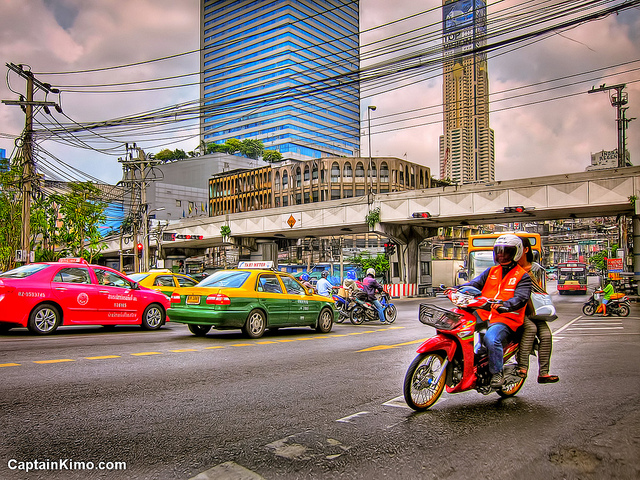
I get to the hair care aisle only to face hundreds of bottles of different products, all in Thai. Had there only been two options, I could have just grabbed a bottle of each and figured it out through trial and error; sadly a variety of different hair treatments were added into the mix.

Twenty minutes later, after carefully studying a large section of bottles -and wandering through a few alternative aisles in the hopes of finding an expat-friendly section with things in English- I found pieces of my Rosetta Stone and I was able to figure out that the bottle on the left with the shorter text and letter resembling a ‘W’ at the end is the shampoo while the one on the right is the conditioner.

This is the hardest I’ve ever had to work for clean hair and apart from an immense sense of satisfaction at locating what I needed, it dawned on me that there are different types of reading. Of course, if you take it out of context such as letters printed on a white piece of paper, I probably could not pick out ‘shampoo’ or ‘conditioner’. Well maybe after the time spent tweaking the pictures I could make an educated guess but that is neither here nor there. However, if I had to run into a shop and quickly grab a bottle of one or the other, I’d have no trouble now that I have a block image of what each word looks like.

How ever tenuous the strand (pun intended), I am going to believe that I’m one step closer to reading Thai.

P.S. I am going to ignore the fact that if I plug both shampoo and conditioner into google translate, it gives me an entirely different set of characters… Boo.